Monday, August 24, 2015

Three Home Exercises To Relieve Lower Back Pain

Although it's tempting for them to just lie down, people with lower back pain will find more relief by performing exercises that stretch and strengthen the lower back. 
http://londonmumsmagazine.com/wp-content/uploads/2013/01/Post-natal-Lying-hamstring-calf-stretch.jpg
Image source: londonmumsmagazine.com

The following are three exercises to relieve lower back pain that can be done at home.

1. Pelvic tilt
A strong core prevents postural problems and the accompanying lower back pain. The pelvic tilt is an exercise that stretches, stabilizes, and strengthens the abdominal muscles.

Lie flat with the arms spread towards the sides, palms facing up, knees bent, and feet flat on the floor. Tighten the abdominal muscles until the back is flattened against the floor. Avoid lifting the hips. Tilt the pelvis upwards until there's an arch in the lower back. The tailbone should remain in contact with the floor. Hold the pose for a few seconds.

2. Cat-cow stretch
The cat-cow stretch or chakravakasana increases spinal flexibility.

Get down on all fours, with the knees in line with the hips and the hands beneath the shoulder joints. The neck should be in line with the torso. Exhale, then contract the abdominal muscles, drawing the belly into the back until the back is arched like that of a startled cat. Allow the head to drop towards the chest. Hold the pose briefly. Exhale, then reverse the pose by lowering the belly to the floor and gazing upwards. Hold the pose briefly.

3. Towel hamstring stretch
Tight hamstrings can limit pelvic mobility and stress out the lower back, causing poor posture and pain. The hamstring stretch prevents lower back pain from getting worse by strengthening supporting muscles and improving hip mobility, posture, and lumbar support.

To begin, sit on the floor and loop a towel around the foot. Lie down flat on the floor and pull the ends of the towel while raising the leg until a stretch is felt behind the thigh. The knee must be straight. The other leg should be completely flat on the ground. Hold this position for 10 to 30 seconds, then repeat on the other leg. 

http://wellbeing365.com.au/wp-content/uploads/2015/05/lower-back-pain-relief.png

For more severe cases of lower back pain, or lower back pain that results from trauma, it's best to consult a medical professional before starting any exercise program.

Physiatrists like Mary Kneiser prescribe comprehensive exercise programs designed to strengthen the lower back and relieve pain. Subscribe to this blog to learn more about coping with back pain.

Tuesday, July 21, 2015

Back on Track: Helping Injured Athletes Regain Physical Vigor

Injuries are constant risks for athletes of every sport. Whether in basketball, gridiron, dirt track racing, or even fishing, the threat of a physical catastrophe looms at varying levels. At the worst case, players are left without choice but to prematurely end their careers and spend the rest of their lives in frustration. Fortunately, physiatrists come to the aid of athletes in accomplishing peak injury-free form.

http://www.bencks.com/wp-content/uploads/2013/01/bencks-photography-athletes-wes-03.jpg
Image source: bencks.com
Physiatrists work diligently to help injured players bring back the bliss and energy in their life following a massive accident or a dreaded disease that left them bedridden, immobile, or disabled. Through a range of customized programs, proven treatments, and physical exercises, physicians restore a certain percentage of the patient’s original physical state. The process is not easy and requires significant patience, determination, and a positive mindset. There have been cases of players fully recovering after religiously following their physiatrists’ advice.

Sports medicine, a sub-specialty of physiatry, is a dynamic and holistic approach to bringing back the body to full function. It focuses on the performance needs of athletes and the prevention of sports-related injuries. It applies to all types of sportsmen: professional, amateur, recreational or scholastic.

http://i.telegraph.co.uk/multimedia/archive/02290/adlington_2290687b.jpg
Image source: telegraph.co.uk
When athletes regain their physical might, they are more determined to recommence their careers and emerge triumphant. They rebuild their self-esteem, create new realities, and improve their overall relationship with other people. The tragic history of injuries serves as cautionary tale that helps athletes become more conscientious of their actions and more strategic in their competitive approach.

Dr. Mary Kneiser is an expert in treating and assessing physical injuries through different technologies such as Electromyography (EMG). For more about her specialization, visit this website.

Wednesday, June 24, 2015

Physical therapy and its role in cancer survivorship

Since time immemorial people suffering from illnesses, whether chronic or short-term, have been advised to get off their feet to rest and recuperate. While this is still a sound recommendation especially if moving causes the patient pain or aggravates the condition, studies have shown that physical activity and exercise, under the guidance and advisement of a physical therapist can prove beneficial to cancer patients and survivors.

A fact sheet released by the World Confederation for Physical Therapy mentions that maintaining an exercise regimen during and after treatments has a positive impact on the general well-being of patients and survivors. Chemotherapy and radiation treatments have some adverse side effects on patients, but these are significantly lowered by the inclusion of physical activity in the individuals' routines.

 
 Image source: commons.wikimedia.org

Without exercise, the cancer patient (or any patient who is bed-ridden for long periods of time) may experience trouble with their body functions, muscle weakness, and stiffness of joints. Adding to that, regular exercise can stem some of the problems that may lead to cancer recurring such as obesity.

That said, cancer patients and survivors may not always feel like they have the ability or the strength to exercise, and that's quite understandable since their health was compromised. To that end, physical therapy and rehabilitation can help cancer patients and survivors improve their quality of life by helping increase physical strength, allowing them to care for themselves and manage their symptoms and treatments.

Physical therapists work with the oncologists, occupational therapists, nurses, and nutritionists to keep the cancer survivors healthy by helping them, especially those who are having trouble with their body's movements during and after their treatments, regain control of their bodies. Physical therapists will not only encourage the cancer survivor to get some exercise but also help them decrease feelings of fatigue while raising endurance and muscle mass.

Image source: flickr.com

More than anyone, physical therapists will know which exercise routines benefit cancer patients the most, especially as their abilities will differ vastly from that of a healthier person's, and thus, along with the oncologists and the entire cancer treatment team, pave the way to the survivor living a longer, cancer-free life.

Dr. Mary Kneiser specializes in physical therapy and rehabilitation medicine which she has used to help patients suffering from conditions including cancer, strokes, and chronic pain. To understand more about what a physiatrist does, visit this website.

Tuesday, May 26, 2015

It’s a marathon: Three ways to prevent running injuries

Running is becoming more popular these days not only because of an increase in health awareness among the public, but also because the activity seems relatively easy to learn and to participate in compared to other sports.


However, one cannot simply grab his or her sneakers and run marathons or even half-marathons. Running is still a demanding sport. Also, like any other sports, running increases the risk of getting injured. Here are three ways to prevent running injuries:


Condition the body … slowly

Image Source: livestrong.com

Before running, one should warm up by stretching the muscles and the joints to be affected. However, it is important not to overstretch as it can do more harm than good. Moderate stretching already helps a lot. Also, walking before running conditions the mind and body to the arduous task at hand.


After a successful run, don’t sign up too quickly for longer distances or extremely difficult tracks. The distance should be increased gradually. A rule of thumb for most runners is to increase mileage only at 10 percent. That’s how the mind and body can be conditioned to run at longer distances slowly.


Lastly, it wouldn’t hurt to add some strength exercises in between runs or marathons.


Change running form

Image Source: dailyhealthlist.com

Running is not as easy as it seems. Done incorrectly, running can lead to gradual, but serious pains and injuries, especially in the feet, knees, and lower back.


There are proper forms of running depending on one’s size, built, speed, and even foot shape. But the overarching theme of all the forms is efficiency. Not only will it conserve one’s energy, it will also put less stress on one’s body. Getting running advice from a running coach will prove extremely helpful to avid runners.


Change sneakers

Again, the human feet come in different shapes and sizes, plus people run differently. It is important to get the right kind of shoes for the right foot size and shape and the right running style. Who knew that there are so many different running shoes, right? There are shoes with support for the foot with a high arch. There are shoes especially designed for those whose soles land first when running.

Image Source: telegraph.co.uk

Also, getting the right shoes will help prevent major injuries to the foot, the knees, or even up to the lower back. Again, consulting a running coach can assist in determining the right shoe for the runner.


Dr. Mary K. Kneiser is a physical medicine and rehabilitation specialist who has been accredited by a number of top hospitals. Visit this website for more information about her practice.

Monday, April 27, 2015

Life in the balance: All about addressing balance issues

The art of keeping balance as accomplished by the human body is so intuitive to many people that it is often taken for granted by anyone who isn't a gymnast or acrobat. Balance issues, however, are very real conditions that can severely impair mobility and daily functions.

Image Source: prevention.com

Balance disorders are characterized by sudden bouts of dizziness and lightheadedness and of spinning surroundings (vertigo) and are sometimes accompanied by blurry vision and outright disorientation. Side effects include nausea and vomiting.

Image Source: hittingperformancelab.com

As a whole, balance issues often start suddenly and with no obvious causes and are very difficult to diagnose. They are caused by a number of reasons, including arthritis, muscle imbalance and medical conditions such as low blood pressure. The most well known reasons, however, are ailments that affect the organs located within the inner ear. A person's sense of balance is maintained by the balance of fluids in the labyrinth and other inner ear organs that comprise the vestibular system, responsible for keeping a person's head oriented correctly.

These disorders can lead to falls among older adults, which can jeopardize their wellbeing and quality of life by causing serious, often lifelong injuries that are difficult to recover from.

Image Source: medicinenet.com

Treatment usually entails pinpointing the exact cause of the balance issue and treat it. Sometimes this involves medication, while other times the moments of vertigo and dizziness must be coped with, necessitating specialized therapy. In the meantime, patients must clarify with their doctors which activity is safe for them in their current condition.

Dr. Mary Kneiser is a trusted authority in the field of physical medicine and rehabilitation and receives excellent marks from three top hospitals. Visit her website for more on her and her contact details.

Thursday, April 10, 2014

REPOST: Google Glass Is Finding Its Footing in the Workplace

Far from being merely a spectacles-borne novelty mobile device, Google Glass is finding acceptance in a serious field: modern medicine. Eric Levenson of The Wire writes about the potential held by Google Glass in the emergency room.
Image Source: thewire.com
Faced with substantial wariness toward privacy concerns, and continued mocking over fashion concerns, Google Glass is moving away from individual consumers toward a more natural ally of its wearable technology — businesses. More specifically, toward hospitals and doctors who can use Glass as a tool rather than a diversion.

A recent study highlighted by Mashable underscored the general problem, as 72 percent of Americans said they won't wear Glass because of privacy concerns. The New York Times puts the conundrum succinctly. 

"Consumers have been wary of Glass. Yet it is finding more enthusiastic acceptance in the workplace: in medicine, law enforcement, manufacturing and athletics," The Times writes.

As if on cue, late Monday night Google introduced its Glass at Work program that targets businesses directly. "A number of companies have already teamed up with enterprise software developers to create new ways to serve their customers and to reach their business goals," Google writes. "This is only the beginning of what’s possible for Glass and business." Glass at Work will initially work with the Washington Capitals hockey team, but there are plenty of other areas it can move into easily.

Image Source: thewire.com
The potential for medicine appears to be the most relevant and dramatic, and several U.S. hospitals have begun equipping doctors with the technology. For example, The Times details a U.C.S.F. lung surgeon who uses Glass during surgery because it shows live images from scans in the corner of his vision while he works. In low-pressure situations, too, like doctor-patient check-ups, some Glass software can hear patient information and automatically input that into electronic medical records. That streamlines the documentation of charts and also allow doctors to spend more time with their patients.

Glass even indirectly helped save a life recently, as The Daily Beast highlighted. In an emergency situation where every second mattered, Boston doctors using Glass were able to access a patient's medications and allergies without breaking eye contact. That allowed for quicker help in the high-pressure ER. And given the importance of sterilization in medicine, Glass's voice activation can help doctors access records without needing outside help, or even putting down their instruments.

The strict legal rules of doctor-patient confidentiality and HIPAA regulations also help by making clear what's okay and what's out of bounds privacy-wise. While the public has yet to fully address the legal ramifications of Glass, medicine has clear boundaries. Software for Google Glass used in hospitals have specific protections built in, including keeping information off Google servers and disabling the technology in different locations. 

The technology is still in its early phase, of course, but targeting medicine and doctors allows Glass to answer the vexing question of why it needs to exist. “It’s a technology that’s searching for problems to solve, and it’s really a matter of where do the problems emerge?” a chief technologist for business consulting firm PwC told The New York Times. Thus far, those problems point Google to a more corporate-oriented pitch for Glass.
For more updates on medicine and advancements in physical therapy, rehabilitative medicine, and health care, visit this blog for Dr. Mary Kneiser.

Thursday, March 27, 2014

REPOST: Rise of sport science cannot hold back sands of time for footballers

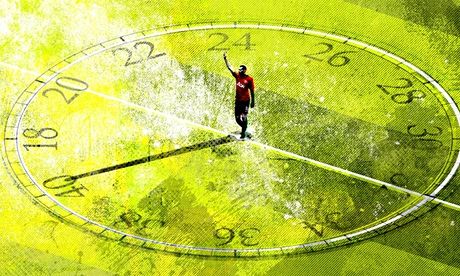
How do medicine and sports science influence a footballer’s form and performance? Sean Ingle of The Guardian investigates.
Image Source: www.theguardian.com

It was a week for football's golden oldies. Samuel Eto'o, at 33, deftly opening the door against Galatasaray and Arsenal and Ryan Giggs, at 40, adding calm and class to Manchester United's engine room against Olympiakos. Arsène Wenger, at 64, chalked up his 1,000th Arsenal game in a daytime "nightmare" at Stamford Bridge.

Amid the eulogies for Wenger, John Hartson spoke of his methods "putting another two or three years" on the careers of Tony Adams, Lee Dixon and Ian Wright. Few would dispute that. In the past decade, those methods have become football's methods. Players are fitter. They recover from training with finely tuned protein-carb shakes, ice baths and massage; not a swift one-two at the pub.

We have come a long way from the days when footballers regarded broccoli as that guy who produced the Bond movies, and only did a downward dog when they slid off a bar stool.

Last year Sir Alex Ferguson said that "sport science is the biggest and most important change in my lifetime". Manchester United monitor 29 variables that may increase a player's susceptibility to injury; sometimes players will be pulled out just before training because something in their data isn't right.

Given such widespread advances, you might expect the average age of players in Europe's top leagues to be climbing sharply. It is not. The Football Observatory recently compared the average age by position of players in the Premier League, Serie A, La Liga, Bundesliga and Ligue 1 from 2005-06 to 2013-14 and found it was also static.

The average age of a first-team defender in the big five European leagues in 2005-06 was 26.21 years; now it is 26.35 – an increase of 0.14 years. The figures for goalkeepers, midfielders and attackers have barely changed either.

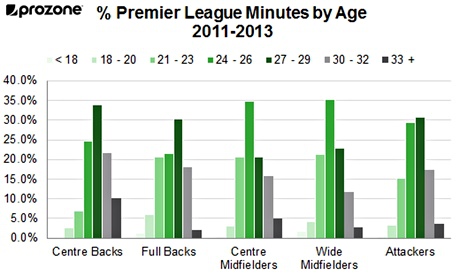
Meanwhile in the Premier League, Prozone's data for the 2011-12 and 2012-13 seasons shows that full-backs 33 or over played just 2.0% of all minutes played by full-backs. For wide midfielders that figure was 2.7%; strikers 3.6% and central midfielders 4.9%. For central defenders – whose positioning can sometimes negate a lack of pace – it was higher at 10.1%.

Image Source: www.theguardian.com

So what is happening? Two things. Sports science is helping older players to stave off the effects of ageing. But, at the same time, the physical demands on footballers is far greater too. So the status quo prevails. Once footballers hit their early thirties they are on borrowed time. Just like they always were.

What is striking, though, is how much faster football has become in the past decade. TV commentators in the 1970s and 1980s were fond of talking about matches being played at 100-miles-an-hour. It was a Sunday morning pootle compared to today's game.

Image Source: www.theguardian.com 


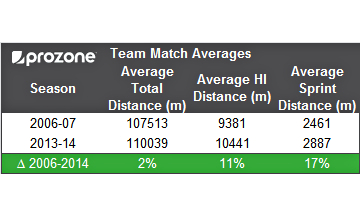
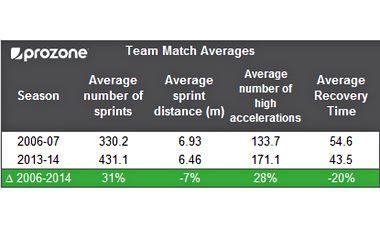
In 2006-07 the average number of sprints per team in a Premier League match was 330.2. This season Prozone's data show that it is 431.1, a 30.6% increase. Meanwhile recovery time between high intensity sprints (speeds of greater than 5.5 metres per second) has dropped from 54.6 seconds to 43.5 seconds, a decline of 20%. 

Image Source: www.theguardian.com 


Perhaps it is not surprising there are so few full-backs, wide midfielders and forwards over 33. They play in positions where a dip in pace is more likely to affect performance. It is not only in road safety adverts where speed kills.

Another development is that clubs monitor GPS and heart-rate data in training. They usually know when a player is 'gone' before we do.

The growth in post- and pre-season tours may also be a factor. Players have less down time to recover in the off-season – so recovery time, which becomes more important with age, can be scarce.

Of course the rate of decline will vary. Genetics, lifestyle, injury history and the number of games can all be a factor. But players are battling against age earlier than is often assumed. Maximal aerobic capacity – or V02 max – peaks around 18 to 20 and while it can plateau until 25 it tends to then decrease by approximately 8-10% per decade.

Dr James Carter, the head of the Gatorade Sport Science Institute at Loughborough University, says that vigorous training after the age of 25 can limit that decline to around 5% per decade but "significant reductions in physiological and performance-related capabilities will be more pronounced once a player enters their thirties".

With some players physiology is not everything. Even in his final season, Paul Scholes's passing figures were as good as ever. Others make themselves relevant in fresh ways. When Giggs still possessed the acceleration of a Maserati and the hips of a ballroom dancer, the ball was lover to nuzzle on those jinking, parabola-like runs; now it is more of a passing acquaintance.

But as a general rule, improvements in sport science and medicine have benefitted younger players as much as older ones. And so veterans are better retained at a similar rate than they were a decade ago. As Carter reminds us, "extending the shelf life of footballers beyond 35, in most cases, is still beyond the remit of science, technology and best practice".

When Giggs and Eto'o started out, football was considered a young man's game. Despite their notable achievements in the past week it still generally is.
Dr. Mary Kneiser’s nearly 20 years of experience in physical medicine and rehabilitation is decorated with various awards and recognition for her skill and expertise in patient care. Get a glimpse of her highly respected practice by visiting this blog.

Wednesday, February 26, 2014

REPOST: A Woman's Guide To Stroke Prevention

The American Heart Association published a new set of guidelines that focus on preventing stroke in women. The organization highlights the importance of medical history management and early lifestyle changes in stroke prevention. Forbes has the full story below.

(Photo credit: Wikipedia) Image Source: forbes.com

A new guideline published in the American Heart Association’s journal Stroke focuses on preventing stroke in the more stroke-prone sex: Women. Though the risk factors for stroke are in large part similar for women and men, women have some additional variables that put them at slightly higher risk throughout their lives. Part of the reason that women are more susceptible than men is simply due to the fact that they live longer. But other factors are largely hormone-related, and relevant to all stages of life.

Stroke is the fifth leading cause of death for men, but for women it’s the third leading cause. Women also tend to have poorer recovery than men, and more residual effects of stroke. They’re also more likely be institutionalized after stroke. Stroke typically occurs when a blood clot forms in a blood vessel going to the brain, thereby depriving it of oxygen.

Changes in the levels of reproductive hormones at different stages of life can affect a woman’s risk of stroke, and this is true for contraceptive hormones at a young age and hormone replacement therapy during menopause. Certain conditions, like preeclampsia, which can significantly raise blood pressure during pregnancy, put a woman at higher risk of stroke both during pregnancy and beyond.

“Women have very unique risks,” said author of the guidelines Cheryl Bushnell, “and they include pregnancy and the complications that can occur with pregnancy, in addition to a high blood pressure during pregnancy, which is preeclampsia and eclampsia. Then there are the issues related to hormonal use such as oral contraceptives and hormones that are used to help treat the symptoms of menopause.”

Here are the major points of the new guidelines:
  • Women with a history of high blood pressure before pregnancy may be candidates for low-dose aspirin (81 mg) after the first trimester, and/or calcium supplements, to reduce the risk of preeclampsia – dangerously high blood pressure during pregnancy.
  • Preeclampsia confers twice the risk of stroke and four times higher risk of high blood pressure later in life. Its stroke risks last well after pregnancy, so doctors should consider it a risk factor just like the classic ones: Cholesterol, smoking, and obesity.
  • Doctors should consider treating pregnant women with moderately high blood pressure (150-159 mmHg/100-109 mmHg) with medication. Pregnant women with severely high blood pressure (160/110 mmHg or above) should generally be treated (some medications are not safe during pregnancy, however).
  • Before starting birth control pills, women should be screened for high blood pressure, since the hormones in birth control can increase the risk of stroke.
  • Women who have migraines with aura should stop smoking to avoid higher stroke risks. Migraine headaches that are accompanied by aura have been linked to increased stroke risk.
  • Women over the age of 75 should be screened for atrial fibrillation, as it is associated with higher stroke risk.
  • Hormone therapy during menopause may increase the risk of stroke, although the data are conflicting. But hormone therapy should not be used to prevent stroke.
  • Psychosocial stress and depression are more common in women than in men, and are associated with significantly higher risk of stroke.

The take-home message is that prevention should be started earlier than it often is – young women should be thinking about stroke prevention, and talking about it with their doctors. Tracking and managing high blood pressure from an earlier age is the key, according to the authors. So is treating high blood pressure somewhat more aggressively (within reason) during pregnancy.

As always, lifestyle changes are the best ways to reduce the risk of stroke. And these healthy behaviors – eating well, exercising, and not smoking – should be a lifetime endeavor.

“We have a sedentary society, unfortunately,” said Bushnell. “I would emphasis exercise, eating right, and the American Heart Association has the whole Life’s Simple 7. And that’s what I would emphasize for younger women – and all women – who may be at risk for stroke. We’re trying to improve the general health of the population. So all of those actions will help prevent stroke in the future – especially for women.”


Visit this Tumblr blog for Dr. Mary Kneiser for more discussions on physical medicine and rehabilitation.

Wednesday, January 15, 2014

REPOST: For young athletes, injuries need special care

Sports medicine is a need for athletes of all ages to help their bodies heal from injuries quickly and get back to top form. Laura Landro of the Wall Street Journal writes about the growing need for physical medicine departments of pediatric hospitals to accommodate teen and preteen athletes.

Children's hospitals are expanding programs to care for a fast-growing category of young patients: injured athletes.

Kaylyn Lambertt, a high-school soccer player and now a freshman at Florida State University, had surgery on her left hip her junior year and her right hip her senior year. Image source: wsj.com

The rehabilitation needs of children and teens are different than those of adults. More sports medicine programs are working exclusively with young athletes, using surgical techniques and physical therapy protocols that don't interfere with growing bones and cartilage.

One aim of this is to prevent affecting the growth plate—the area of growing tissue near the end of long bones in children and teens. For example, while adults may lift heavier weights to build muscle during physical therapy, pediatric patients may do higher repetitions with lower resistance to avoid hurting growing bones, muscles and tendons. The programs also offer encouragement and support for kids upset to be sitting out of a beloved sport.

More than 3.5 million children a year receive treatment for sports injury, according to Stop Sports Injuries, a campaign whose backers include the American Orthopaedic Society for Sports Medicine. And high-school athletes account for an estimated 2 million sports injuries each year. While concussions account for about 15% of youth sports injuries, experts say many sports carry risks for musculoskeletal injuries, in large part due to increased emphasis on year-round competition, single-sport concentration and intense training regimens.

A study published last year by Boston Children's Hospital warned that children of all ages are sustaining significant sports injuries that require surgical intervention. "In the past we'd put a cast on a broken leg, take it off six to 13 weeks later and send kids home," says Lyle Micheli, director of the hospital's division of sports medicine. "Now we realize we have to very systematically rehabilitate these kids for strength and basic function, and determine when it is safe for them to return to play."

Image source: wsj.com

While injuries from recreational activities such as biking have fallen over the last decade, team sports including football and soccer saw injuries rise by 22.8% and 10.8% respectively, according to a study last year by Cincinnati Children's Hospital Medical Center.

Doctors are seeing more overuse injuries. There has been a fivefold increase since 2000 in the number of shoulder and elbow injuries among youth baseball and softball players, according to Stop Sports Injuries.

Children's Hospital & Research Center Oakland, in California, last fall opened a Sports Medicine Center for Young Athletes at its Walnut Creek campus. "It's hard for kids to do rehabilitation next to an 85-year-old stroke victim or a 75-year-old cancer patient," says Nirav Pandya, the center's director, and an orthopedic surgeon. The center and many other pediatric clinics offer classes and programs to help kids improve sports performance while avoiding injury.

Physical therapy after injury and surgery, such as repair to the anterior cruciate ligament in the knee, is covered by insurance for varying periods. After that, clinics may design a regimen children can perform at home or at a local fitness facility.

Jeremy Frank, a pediatric orthopedic surgeon at Memorial Healthcare System's Joe DiMaggio Children's Hospital in Hollywood, Fla., says that there is often little pain a week after minimally invasive ACL surgery, so young people "think they are good to go and don't realize they have six months of rehabilitation in front of them." Often, he says, there is a "bargaining moment" where his young patients try to get him to approve more activity than they are ready for. Patients are generally referred to Memorial's two U-18—for Under 18—physical rehabilitation clinics in Coral Springs, Fla., where therapists work with families and coaches to stress the importance of healing.

Dr. Frank, U-18's assistant director, says while the vast majority of athletes get back to sports and do well, there are times when a young patient sustains multiple injuries such as a third ACL tear. "You have arthritic changes in your knee, and you have to stop playing soccer," he says.

Dylan Rupert, 17, a running back and captain of the Cypress Bay High School football team in Weston, Fla., tore his ACL during play last fall. His parents opted for a repair technique, which surgeons are more often using in pediatric patients. The procedure avoids drilling through the growth plate and may decrease risks of future pain and re-injury. The surgery used part of Dylan's own hamstring rather than a cadaver tissue more commonly used in adults. He started rehab at Coral Springs three days after his Oct. 22 surgery.

The injury was devastating for Dylan. It came just as he was getting the attention of college coaches, says his mother, Monica Puga-Finch, an information technology program director at the clinic's parent Memorial. In his first physical therapy session, senior therapist Whitney Chambers helped calm his fears, but "told him that she was going to push him, and he couldn't say 'I can't.' " As the sessions continued twice a week he would often come out sweating and sore but excited, "with a sense of accomplishment," Ms. Puga-Finch says. Ms. Chambers helped with the emotional aspects of being sidelined, encouraging him to go to practices and games with his team. His rehabilitation is expected to take six to eight months. He plans to return to sports in college.

Ms. Chambers says physical therapy after the growth-plate sparing procedure is more conservative than for the traditional ACL reconstruction. It starts with protective weight bearing exercises using crutches and a knee brace, gentle range of motion work, and ice and electrical stimulation for swelling and pain control. Then she works on strengthening muscles and restoring joint flexibility. To make it more fun, she uses games or obstacle courses.

The clinic uses screening questionnaires to identify kids at risk of depression, who may be referred to a child psychologist.

Kaylyn Lambertt who has played soccer from the age of 6, was a junior in high school when she felt a searing pain in her left hip during a game in December 2010. She continued to play for months as it got worse. Her labrum, part of her hip joint, was torn in two places, with a socket out of place. A lump on her bone was wearing down the cartilage every time she walked or ran. She had surgery to repair the damage in 2011, followed by months of rehabilitation with Ms. Chambers.

She returned to soccer her senior year, but began feeling pain, this time in her right hip. Dr. Frank told her that she had torn the labrum. She underwent a second surgery in December 2012. She returned to Ms. Chambers and realized during their talks that "soccer isn't everything." Now a freshman at Florida State University she plays a pickup game of soccer now and then, but is focused on what Ms. Chambers inspired her to chose as a career: physical therapy.

Dr. Mary Kneiser has behind her two decades worth of experience as a physical medicine and rehabilitation specialist. Visit this Facebook page for more updates.

Friday, December 13, 2013

REPOST: Amputees help advance thought-controlled prosthetic technology

Losing a limb is a traumatic event for most people who go through it. Moving forward usually requires a lot of time and support. Fortunately, there are many paths towards recovery and rehabilitation and this includes prosthesis. The Baltimore Sun reports on an interesting new development in prosthetic technology: thought control.
  

Video: A doctor at Johns Hopkins is working on the development of thought-controlled robotic arms to aid amputees. (Kim Hairston/Baltimore Sun video) | Video source: The Baltimore Sun

One minute, Anne Mekalian's brain is telling her prosthetic arm to unstack a set of multicolored plastic cones, and the shiny black metal limb is listening. Every now and then, the plastic clatters to the table, but quickly the cones are separated and restored to a neat pile.

The next moment, though, the bionic hand doesn't know what to make of slight muscle movements in Mekalian's forearm, interpreted through a set of electrodes touching the skin on the rounded remnant limb that extends just below her elbow. Instead of pinching a red clothespin, the robotic hand spins like Linda Blair's head in "The Exorcist."

"This is why it's experimental, right?" Mekalian, of Joppatowne, joked to a group of scientists who had gathered in an office at Johns Hopkins Hospital to watch her as part of clinical trials of advanced prosthetics.

Despite occasional setbacks — and, perhaps, because of them — the technology is advancing quickly. Over the past several months, Mekalian and two other amputees working with a Johns Hopkins Hospital surgeon and local company have been among the first in the nation to take home thought-controlled robotic arms designed for wounded veterans.

While the devices haven't been perfect replacements for limbs lost, they have brought a glimpse of what patients took for granted before being struck by infection, cancer or violence. Trial and error applying the technology to their daily lives — putting on makeup, cooking, carrying a laundry basket — is leading to refinements. The scientists say the technology could be available within a couple of years to countless others commercially, with plans for U.S. Food and Drug Administration review next year.

Before that can happen, the scientists are learning all they can through the 67-year-old Mekalian and the others.

"We're almost inventing a new field of medicine," said Dr. Albert Chi, a Johns Hopkins trauma surgeon working with the patients. "We're kind of learning as we go. There's no textbooks out there."
Read the entire article here.

Dr. Mary Kneiser and physical medicine experts await this newest development in prosthetic technology eagerly as this may mean better things for amputees. For more on physical rehabilitation, follow this Facebook page.

Monday, November 11, 2013

REPOST: Spinal cord injury: Levels, symptoms & treatment

LiveScience.com's Tanya Lewis writes about the injuries that may affect the spinal cord and the treatments used to address them.

The spinal cord is a bundle of nerves that extends from the brain and runs down the middle of the back. It sends signals to and from the brain and the rest of the body. It is a soft tissue surrounded and protected by the vertebrae in the spine.


Shown here is the nervous system, containing the brain, spinal cord and peripheral nerves.
Image source: LiveScience.com


A spinal cord injury is caused by damage to any part of the spine, including to the vertebrae, ligaments or disks, or the spinal cord itself. Spinal cord injuries can cause permanent loss of function below the level of the injury, including paralysis.

The incidence of spinal cord injury among survivors is about 40 cases per million in the United States, or about 12,000 new cases per year, according to the National Spinal Cord Injury Statistical Center (NSCISC). Estimates of the number of people in the United States living with spinal cord injuries range from 238,000 to 332,000.


Causes

A sudden blow to the spine that fractures, dislocates, crushes or compresses the vertebrae can cause traumatic spinal cord injuries. A gunshot or knife wound can also cut the spinal cord. During the weeks following the injury, bleeding, swelling, inflammation and fluid buildup in or near the spinal cord often cause further damage.

Diseases such as arthritis, cancer, inflammation, infections or degeneration of spinal disks can cause nontraumatic spinal cord injuries.

NSCISC lists the following causes of spinal cord injury since 2010:

  • Motor vehicle accidents (36.6 percent)
  • Falls (28.5 percent)
  • Violence (14.3 percent)
  • Sports (9.2 percent)
  • Other/Unknown (11.4 percent)

Spinal cord injury levels

Spinal cord injuries vary in their location and severity. The "level" of injury refers to the lowest part of the spinal cord with normal function. Higher-level injuries affect the arms, hands, trunk, legs and pelvic organs, whereas lower-level injuries affect only the legs, pelvic organs and trunk. These can result in paralysis of all four limbs (tetraplegia or quadriplegia) or paralysis of the lower limbs (paraplegia).

The severity of the injury is classified as either complete, in which nearly all movement and sensation below the level of the injury is lost, or incomplete, in which some residual movement and sensation remains.

Image source: LiveScience.com

Symptoms

Symptoms of spinal cord injury include:

  • loss of movement
  • loss of sensation (sense of touch, heat or cold)
  • loss of bowel or bladder control
  • exaggerated reflexes or spasms
  • changes in sexual function or sensitivity
  • pain or stinging due to nerve damage
  • difficulty breathing, coughing, or clearing the throat
Emergency symptoms of an injury include:

  • severe pain or pressure in the neck, head or back
  • weakness, lack of coordination or paralysis of part of the body
  • numbness, tingling or loss of feeling in the hands and feet
  • loss of bladder or bowel control
  • difficulty walking or balancing
  • difficulty breathing after the injury
  • a twisted neck or back

People with these symptoms should seek immediate medical attention.

Treatment

Treatment options are limited, but prosthetic technologies and therapeutic drugs that may help nerve cells regenerate or improve how well remaining nerves function are being developed.

Immediately after an accident, emergency responders immobilize the spine using a stiff neck collar and carrying board in order to transport the patient. Emergency treatment involves maintaining breathing ability, preventing shock, keeping the neck immobilized, and preventing complications such as blood clots.

Once a patient is diagnosed with a spinal cord injury, they may receive medications, such as Methylprednisolone (Medrol), which can cause mild improvement in some patients, if taken within eight hours of injury. Doctors may use traction (often by attaching metal braces and weights to the skull to prevent it moving) to stabilize the spine and/or realign it. Surgery may be needed to remove fragments of bone, herniated disks, fractured vertebrae or foreign objects, or to stabilize the spine to minimize pain or future deformity.

A variety of experimental treatments may also be available.

Rehabilitation

A team of therapists and specialists work with patients during their early stages of recovery. Physical therapists focus on having the patient maintain and strengthen existing muscle function, while occupational therapists, rehab psychologists and others help the patient learn basic tasks and new skills.

Modern technology can provide some independence to individuals living with spinal cord injury. Assistive equipment includes wheelchairs, computer adaptations, electronic aids, robotic gait training and electrical stimulation.

Researchers are currently developing neural prostheses, known as brain-computer interfaces. These systems use electrodes on the scalp or implanted in the brain, which record electrical signals from neurons and translate them into control of a computer or prosthetic limb. The technology is still in its early stages, however, and not available for general use.
  
Get more updates on physical medicine and related disciplines from this Mary Kneiser blog

Tuesday, October 8, 2013

REPOST: What Kids Should Know About Spinal Injuries in Sports

Laura Landro discusses efforts to raise awareness of a little-understood but dangerous risk to young athletes: injuries to the cervical spine which can lead to paralysis or even death. More from this Wall Street Journal article.

There is a new push to alert high school athletes about neck injuries.
(Image source: wsj.com)

It could be a hard tackle in football, a cross-check in ice hockey or a fall off the top of a cheerleading pyramid.
A new push is under way to raise awareness of a little-understood but dangerous risk to young athletes: injuries to the cervical spine, the highly vulnerable area between the first and seventh vertebrae that protects the spinal cord connecting the brain to the body. Players and teammates may not instantly recognize the severity of the damage, and the wrong move can damage or sever the spinal cord, resulting in paralysis or even death.

In addition to programs to educate coaches, parents and students, a number of groups are pressing for more certified athletic trainers who are qualified to quickly recognize and respond to spinal and other injuries.

Though less common than concussions, cervical-spine injuries most often occur when players in contact sports lower their head or tuck their chin into their chest and collide with another player, the ground or objects such as goal posts. While players often recover from injuries such as fractures of one or more vertebrae, commonly referred to as a broken neck, cervical spine injuries can also be quickly fatal.

De'Antre Turman, a 16-year-old Atlanta-area high school football player, died in August after being injured during a scrimmage, suffering a fracture to his third vertebra on the field, Fulton County Medical Examiner investigator Mark Guilbeau said in a telephone interview.

San Diego-based Athletes Saving Athletes co-founder Tommy Mallon, kneeling, conducts a demonstration with volunteer Danny Kolts during a 2012 seminar.
(Image source: wsj.com)

The Centers for Disease Control and Prevention estimate as many as 20,000 spinal-cord injuries occur annually in the U.S., with sports accounting for about 12%, and new cases most often occurring in 15-to-35-year-olds.

Robert Cantu, chief of neurosurgery at Emerson Hospital in Concord, Mass., and medical director of the National Center for Catastrophic Sports Injury Research at the University of North Carolina at Chapel Hill, says new rules put in place in 1976 to discourage headfirst contact in football—known as "spearing"—aren't consistently followed.

The number of reported cervical-spine injuries that lead to permanent or temporary neurological damage, such as partial or complete paralysis, remains small but appears to be on the rise. The center's Annual Survey of Catastrophic Football Injuries in high school and college last year found that in four of the previous 10 years, the number of such injuries that led to some paralysis was in the double digits—14 in 2008, for example—after dropping into the single digits throughout the 1990s. Many severe spinal-cord injuries in sports also go unreported, Dr. Cantu says.

Coaches who were surveyed told the researchers that they teach players to tackle with the head up, but many players still lower their heads before making contact and many ball carriers are injured with their heads down.

"There is a sense of invulnerability in young athletes who think it's not going to happen to them," says Ron Courson, director of sports medicine at the University of Georgia. In addition to training players on proper blocking and tackling techniques, his team practices injury response scenarios on the field with trainers, physicians and emergency responders before football season begins.

At Penn-Trafford High School in Harrison City, Pa., there are three athletic trainers on staff for the 1,600 athletes in grades 9 to 12, says Larry Cooper, head athletic trainer. Parents can attend classes for coaches about injury risks and a sports emergency action plan is available on the school's website.

While college athletic programs nearly always have athletic trainers on staff, the National Athletic Trainers' Association says only two-thirds of U.S. secondary schools with athletic programs have access to full- or part-time athletic trainers, who are typically licensed by the state and work under the direction of physicians. That's up from 40% to 45% in 2005, but leaves a third of schools without one, the nonprofit association says. The group is conducting a state-by-state ranking of public schools and a similar study on private schools to determine why schools don't have trainers. (Expense is one factor.) The group also is analyzing the medical care available at games when an athletic trainer isn't present.

Athletes Saving Athletes graduate Tucker Boucher, left, with fellow San Diego-area student-athletes. ASA focuses on sports safety education and injury prevention.
(Image source: wsj.com)

"Parents who would never leave their kids off at a public swimming pool without a lifeguard think nothing about dropping them off at football or soccer without an athletic trainer. But they need to ask who is taking care of their kids when they are participating in these sports," says Jim Thornton, president of the athletic trainer association and director of sports medicine and athletic training at Clarion University in Clarion, Pa.

The association issued recommendations for management of cervical-spine injuries in athletes in 2009 which include special care in removing a helmet, face mask and shoulder pads and immobilization techniques on the field. Erik Swartz, an athletic trainer and associate professor at the University of New Hampshire who co-wrote the recommendations, says one of the highest risks in a spine injury is moving an athlete.

Tommy Mallon, now 22, collided with another player during a lacrosse game in 2009 at Santa Fe Christian high school in Solana Beach, Calif. A teammate ran to his side but fortunately didn't attempt to help him up until athletic trainer Riki Kirchhoff got to the scene. She kept Mr. Mallon on the ground until emergency medical responders arrived.

At the hospital, he was diagnosed with a fracture in his spine at the C1 vertebra and a damaged artery restricting blood flow to the brain. After months of grueling rehabilitation, including traction in a massive "halo" device to immobilize his head and neck and physical therapy, he was able to start classes at the University of San Diego in the spring of 2010. Though he won't be able to play contact sports again, he sustained no permanent neurological damage.

Mr. Mallon and his mother, Beth Mallon, a photographer who was at the game when his injury occurred, formed a nonprofit group, Advocates for Injured Athletes, to help other families navigate the challenges of injuries and lobby for certified athletic trainers at every high school.

Last year the Mallons also launched Athletes Saving Athletes, a program which offers classes taught by athletic trainers to help student-athletes understand signs and symptoms of different types of sports injuries and conditions. About 1,500 athletes in the San Diego area have participated and Ms. Mallon aims to expand the program. "We can educate athletes to recognize basic symptoms, and if they suspect a neck injury, don't move them. Don't touch them. Just stay with them until help arrives," she says.

Tucker Boucher, 16-year-old junior at Cathedral Catholic High School in San Diego, says after going through the program, he talked to his lacrosse team about risks and how to recognize symptoms of injury. His mother, Annie Boucher, who also attended a session, says the training "empowers these kids with knowledge of certain situations that can save somebody's life."

Dr. Mary Kneiser works with athletes as they regain their strength and form after suffering an injury. Learn more how physiatrists help injured athletes get back on their feet on this Facebook page.

Thursday, September 12, 2013

REPOST: Children who live in "smart growth" neighborhoods get 46% more physical activity

A study by the American Journal of Preventive Medicine shows that children living in places close to parks and green space areas get 46% more physical activity compared to those who do not. News-Medical.net reports on the study's findings. 


Image Source: cdn.sheknows.com
Children who live in "smart growth" neighborhoods--developments that are designed to increase walkability and have more parks and green space areas--get 46 percent more moderate or vigorous physical activity than kids who live in conventional neighborhoods, finds a study in the American Journal of Preventive Medicine.

"We were surprised by the size of the effect," said Michael Jerrett, Ph.D., professor in the School of Public Health at the University of California, Berkeley and lead author on the study. He and his colleagues evaluated activity patterns in children aged 8 to 14 who recently moved to a smart growth community called The Preserve near Chino, CA. The researchers compared them with children living in eight nearby conventional communities, matched for ethnicity and family income.

The children wore small accelerometers and global positioning system (GPS) devices to measure their activity levels and determine how much activity occurred outside the home but within the neighborhood. The devices collected and recorded information about their physical activity for seven days and determined that living in a smart growth community would add 10 minutes of activity for each child each day.

"Ten minutes of extra activity a day may not sound like much, but it adds up," said Jerrett. Taking in as little as 15 calories more than you expend on a daily basis can lead to weight gain over time, he noted. A child who weighs 100 pounds might burn an extra 30 calories in those 10 extra minutes of physical activity each day. "The basic idea is that even small things count," he said.

Previous research has found that only 42 percent of children aged 6 to11 get the recommended amount of physical activity. This drops to 8 percent for those aged 12 to 19 years, Jerrett said. In fact, younger children in the smart growth community were 62 percent more active in their neighborhood than older children. Boys were 42 percent more active in the smart neighborhood than girls, Jerrett said.

The conclusions of the study are very consistent with current thinking and research, commented Kaid Benfield, director of sustainable communities at the Natural Resources Defense Council in Washington, D.C. Smart communities are being planned and created, but existing communities can be retrofitted to be smarter and encourage more exercise, he reported.

"The best way to retrofit suburbs is to redevelop parcels of land that become available as strip malls, big-box shopping, and regional malls go out of service - replacing them with more walkable, mixed-use development."


Mary Kneiser is a physical medicine and rehabilitation specialist who has been helping patients for more than two decades now. Know more about her professional career by visiting this Facebook page.

Friday, August 9, 2013

Boxing? Bring your boxing shoes first

Image Source: boxingscene.com

The unbelievable feats and global renown of Filipino boxing champion Manny Pacquiao are largely credited for restoring popular interest in boxing, after seasons of slumping ticket sales in the sport. Boxing is also moving out of the professional ring, for many fitness enthusiasts consider it effective for trimming down and becoming healthier.

However, in line with the easy recreational culture surrounding boxing these days, there seems to be little regard for the sport’s modicum : there are too few available boxing shoes in the market, and many boxing gyms today teem with “boxers” wearing inappropriate shoes. Certainly, tennis, cross training—even slacker sportswear Chuck Taylors—and basketball shoes aren’t suitable for the canvas. Especially not for a physically demanding and ankle-breaking sport like boxing.


Image Source: boxingsocialist.com

Wearing proper shoes in the boxing ring has benefits.

For safety purposes, boxing shoes are the perfect cushion for running on the slippery canvas. Also, boxing is a sport that demands a lot of rhythmic footwork. Wearing shoes that are designed for frequent pivoting of the ankles protects the boxer from foot injuries.

Apart from feet protection, comfort is the main idea behind the ergonomics of boxing shoes. These are manufactured with lightweight and non-slip rubber that articulates perfectly with the canvas.


Image Source: ultfitev.com

Lastly, aesthetics: Oscar dela Hoya in basketball shoes would be laughed out of the ring, and recreational boxers may well look the part. The elongated, slick, and classy design of boxing shoes is beyond ergonomics. Manny Pacquiao’s image is burnished by the distinctive aura lent by his boxing shoes.


As a physiatrist, Dr. Mary Kneiser believes in the importance of wearing proper sports attire to avoid physical injuries. Follow this Twitter page for more information on physical medicine and rehabilitation.

Saturday, July 20, 2013

Bionic hands, prosthetic legs, and rehabilitation therapy

Life is hard for people who have undergone hand and leg amputations. Without hands to “keep things in order” and feet to “go about doing business,” daily routines will never be as normal as how they used to be. Fortunately, prostheses exist to provide amputees their newfound function and independence.

Video Source: cnn.com

One of the latest developments in prostheses is the i-limb ultra prosthetic hands. More commonly known as bionic hands, the technology uses unique biosim software that enables movement akin to natural hands, including the ability of each finger to bend at the natural joints to precisely fit around the shape of objects. Among the hand amputees who use this technology is Aimee Copeland, a woman who was infected with flesh-eating bacteria. Her hands had to be cut in order to stop the spread of infection, but she can now groom her hair, chop vegetables, and pick up tiny items with the help of her artificial hands.

Image Source: touchbionics.com

Paralympic athlete Oscar Pistorious is one of the famous people who don prosthetic legs. The sprint runner, whose legs were amputated when he was 11 months old, competes in sprint running events for amputees and able-bodied athletes using his lightning-fast prosthetic legs. He is known as the “Blade Runner” who runs on carbon-fibre prosthetics called the “Flex-Foot Cheetah.”

Image Source: ubergizmo.com

Bionic hands and prosthetic legs are just two of the many prostheses that help amputees grasp, stabilize, and maneuver objects just like normal people. In physical and rehabilitation medicine, prostheses function as support to help patients recover from medical treatments and improve their quality of life. The Amputee Coalition of America emphasizes the role of physiatry in improving the physical and emotional well-being of amputees. Physiatrists, like Dr. Mary Kneiser, can also prescribe the right prosthesis and rehabilitation services for amputees.


Visit this Facebook page to learn how a physiatrist can help patients recover from amputations.

Wednesday, June 5, 2013

Young and at risk: The rising incidence of stroke among adolescents

It seems that no one is really too young to have a stroke.

Image Source: theweek.com

A recent study published in the journal Neurology found that the proportion of young people who are having stroke increased from one in eight stroke patients in the mid-‘90s to one in five in just over a decade. This supports a previous report that found trends toward increasing stroke incidence in younger adults (age 20 to 54). The Centers for Disease Control and Prevention also noted a steep increase in stroke incidence among people in their 30s and 40s.

Many factors have been recognized that raise the incidence of stroke among young adults. These include the usual cardiac risk factors: obesity, high blood pressure, high cholesterol, and smoking. Abuse of alcohol and drugs are also contributing factors. People prone to migraines also have a somewhat higher risk of stroke. Recently, a study noted how being depressed nearly doubled the risk for stroke among young women.

Image Source: nytimes.com

 Stroke is a leading cause of death in the United States with more than 800,000 people dying annually from strokes and cardiovascular disease. Medical experts advocate healthy living to cut down stroke risk among young adults. Moreover, recognizing the signs of stroke is vital to recovery. The National Stroke Association’s Five Sudden, Severe Symptoms campaign provides stroke signs people should watch out for, including a sudden numbness or weakness of face, arm, or leg, especially on one side of the body.


Video Source: nbcnews.com

Physiatrist Dr. Mary Kneiser works with patients’ post-stroke rehabilitation. More information on stroke rehabilitation is available at this website.